


Janos Mark Szakolczai
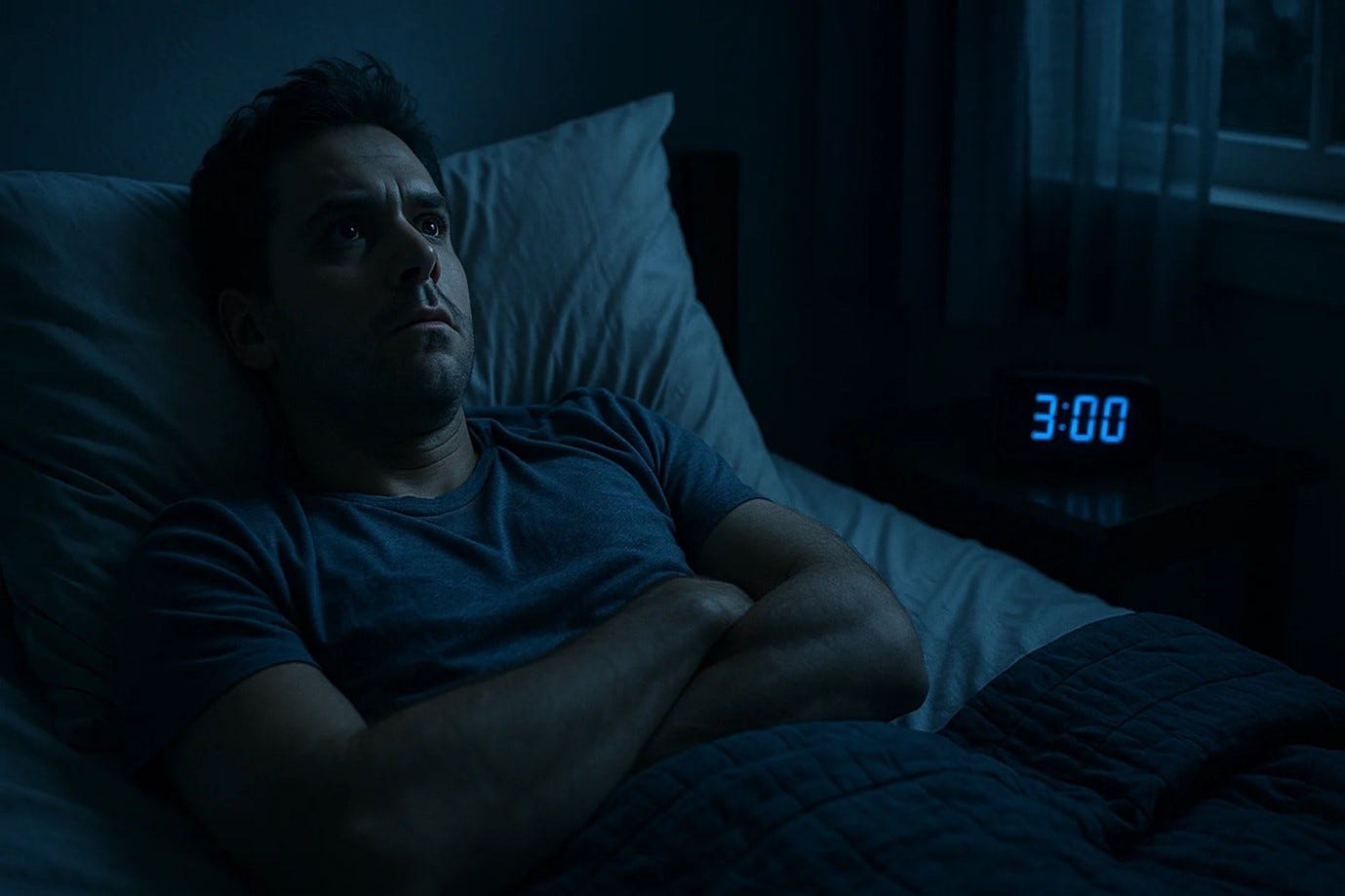
Credit: the Sleep Guide (possibly AI generated?)
The Book of Life
We are currently in an age where, however engaging the literature of correspondences remains, one is reminded of the astonishing letters that Hermann Hesse sent during the War period from Casa Camuzzi; such texts evidently stand in marked contrast to the immediacy of contemporary digital correspondence: hyper-connected thoughts projected almost instantaneously into the public sphere. This stands in contrast to what handwriting entailed for millennia, and later to typewriting, both of which imposed a slower, more mediated process. Think of Nietzsche when he turned to the complicated Malling-Hansen Writing Ball typewriter in response to his increasing difficulty with writing by hand – with whom he wrote this cute yet very Nietzschian poem:
“THE WRITING BALL IS A THING LIKE ME: MADE OF IRON
YET EASILY TWISTED ON JOURNEYS.
PATIENCE AND TACT ARE REQUIRED IN ABUNDANCE
AS WELL AS FINE FINGERS TO USE US.”
(Friedrich Nietzsche, on February 16th 1882 – translated from German)
Nietzsche was indeed quite right on his twisted journeys parable, and the relevance of five patient and tactful fingers necessary in writing, a physical action, weighted and thought out (and was even criticised for harshening his thinking because of it…). But readership also remains a central concern of our current age regarding both writing and reading. Other than random ‘comments’, online correspondence in the form of ‘chats’ or posts is rarely read in any sustained, extended or determinate way – aside, perhaps, from institutional or automated forms of surveillance. Rather, it is evident that anyone encountering their own posts and online commentary – unmediated by reviewers or any form of external editing – will quickly experience the disquiet of seeing their thoughts virtualised and digitised endurance across time and space, at a scale that is difficult to delimit, and even harder to fully conceive, particularly in light of the continuous expansion of data archival infrastructures and now AI Data Centres.
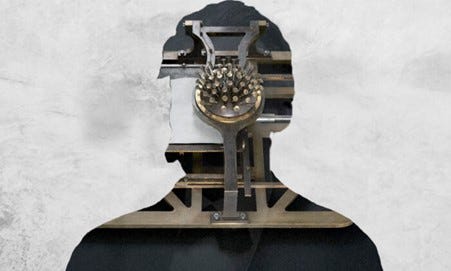
Artwork: Robert Hassan
But this is only partly the point. What is striking is that this mode of engagement is not only permanent, but is often approached in a way that feels unmeaningful relative to what we ordinarily require within a specific time and space.
Remembrance of Life’s past
Moxie Marlinspike, the founder of Signal, designed the platform as an alternative to WhatsApp – specifically a tool through which messages could disappear rather than be stored indefinitely. As stated in his blog, this impulse was shaped by a recognition – if not a personal shock – that anything written in a chat tends to age extremely poorly, often producing a sense of embarrassment for the poster.
This sense of embarrassment is, for me, central. It cuts to the core of our everyday interactions with these technologies – the constant back-and-forth between users and devices, and the tools through which we communicate. I have recently written about the dynamics of hype that these smart devices enable, particularly the smartphone: hype not merely as something they host, but as something they actively produce, through the design of their affordances and their persistent attempts to draw the user’s attention back.
But this “drawing back” requires further consideration. What kind of recall is actually taking place? Our devices continuously call on us, demand our attention, and extract our data. Yet what emerges from this – what results from such intensive screen time – raises a more difficult question: to what extent is this form of engagement detached from lived experience and from the processes of memory itself?
Return of the Drowsed Column
What, instead, takes place when we return to our devices – when we return to our past engagements, to lives that are now fundamentally online and thus approximate what Luciano Floridi has termed the “onlife” – is something akin to a dream-state scenario: a rapturing condition that draws us back into a drowsy, oneiric state, one over which we have only limited capacity to resist or exert control.
My argument, then, is that the smartphone – and the wider ecology of devices through which we interact and hyperconnect – functions almost like a translucent sleeping pill continuously administered. It does not simply connect us; it gently sedates, drawing us into a detached state whereas everything we navigate, engage, encounter online, including the thoughts we produce and share, takes on the quality of a dream-like engagement: images flow past, impressions accumulate, and we retain the sense that we are lucid, actively participating in meaningful exchange – until, at some point, it becomes evident that we are not: we struggle to remember them, and struggle to make sense of most of their content.
Again, none of this is necessarily original. Aldous Huxley, in Brave New World, already offered a clear reference point through the notion of soma – a substance that soothes, distracts, and ultimately removes individuals from the burdens of their condition. In many respects, this functions as an apt analogue for contemporary everyday interactions. The dynamic has become almost trivial: an individual caught off guard in a public setting – suddenly alone in the middle of a conversation, whether because a companion steps away, is called elsewhere, or simply turns to their own device – will almost instinctively reach for a screen, usually their own smartphone. The gesture is immediate and largely unquestioned; the device becomes the default mediator of that momentary void.

Credit: https://acid-age.blogspot.com/2011/01/soma-relief.html
This is where Byung-Chul Han’s argument concerning “non-things” becomes particularly relevant. These quasi-objects we hold and interact with – devices on which we type, scroll, and communicate – are physically present, yet they resist the status of “things” in any traditional sense – as Latour and Serres considered. They are immaterial in their operative logic, despite their tactile form, and they exert a disproportionate weight on our behavioural affordances relative to what they ostensibly are. The smartphone, then, is not simply a sexy, expensive, ever-demanding machine, but an entire apparatus that structures and solicits our engagement.
What follows from this is a mode of interaction that can be understood as a perpetual dreamscape. Engagement is continuous, absorbing, and curiously detached. In this sense, the smartphone – and particularly devices such as the iPhone – comes to function as a kind of “dream machine”: a mechanism that captures attention, sustains immersion, and situates the user within a state that feels active and participatory, yet remains fundamentally estranged from grounded, embodied experience.
The Dream Machine
Watched from afar, the smartphone user strikes for their distinct posture: prone over the small screen with minimal motion – especially when bored, watching something, lying in bed. It almost resembles a foetal pose, and an amniotic ambivalent state that closes off from the surrounding environment. Covered by the halo of the blue-filtered light, the user is an ‘engaged’ detachment: they are glued to the device yet simultaneously distracted. Immersed yet isolated. They dream a dream of perpetual entertainment, but a dream that leaves nothing behind – no memory, no perception, nothing, surprisingly, nothing, surprisingly, that is easily shared in words – expressed from mouth to ear. We may share, post, like, but we hardly paraphrase, narrate, or interact (another of Byong-Chul Han’s themes). It is instead a replication of a dream, a dream within a dream that other users may share, post, and like – without clearly engaging. This is the centrality of the dream machine’s derailed tension. To be online today is to be in a drowsy, subconscious state, jumping back and forth between dream and lucidity (on and off our screen), we cannot do without dreaming, nor sleeping. But the perpetuity of sleep – too much sleep, too many dreams – dulls us further, creating a condition where we’re never truly awake. Instead, the device, the smartphone itself, fosters a hyper-dream state that perpetually imitates our desire and commitment to return to the dream state, with nothing really waking us up from what surrounds us.
But when we are staring at the screen, there’s the full REM condition that causes the flickering rise and fall of the eyes on the screen, which appears somewhat addictive, something we can’t do without.
During the virtualised continuous rapid-eye-movement (REM), users oscillate between the low-grade euphoria of endless, often vacuous entertainment and the more oppressive register of doomscrolling and algorithmically generated content. The result is a time-draining, eye-straining condition in which orientation begins to dissolve: one no longer clearly knows where one has been or what one has seen. “Waking up” from this state resembles a partial return – rubbing one’s eyes, not restored but disoriented, holding only fragments of perception and memory. It is, in this sense, a distinctly oneiric condition.
Moreover, the much-invoked – and often overstated – notion of “dopamine-driven” engagement, in which apps and platforms are designed to generate reward and sustain user “hooking,” can, under this reading offer, rather than a simple stimulus-reward loop, something that more closely resembles a DMT-like (dimethyltryptamine) effect: a state of immersive, quasi-psychedelic absorption or why not, in Gell’s terms, abduction. The expanding ecology of interconnected devices–many of which incorporate forms of noise-cancelling and facilitate self-isolation – functions as a series of quasi-isolation chambers, extending and stabilising this condition of a perpetual altered state.
DMT and related entheogens are often described–albeit speculatively–as “flooding” the brain, producing states associated with profound relaxation, whether in near-death experiences or in cathartic practices such as the use of ‘ayahuasca’. In this sense, they are not simply linked to continuous stimulation, but to a form of immersive, even diffuse absorption: an altered, enveloping condition that approaches a quasi-death threshold, bordering on semi-sleep and culminating in a dream-like immersion.
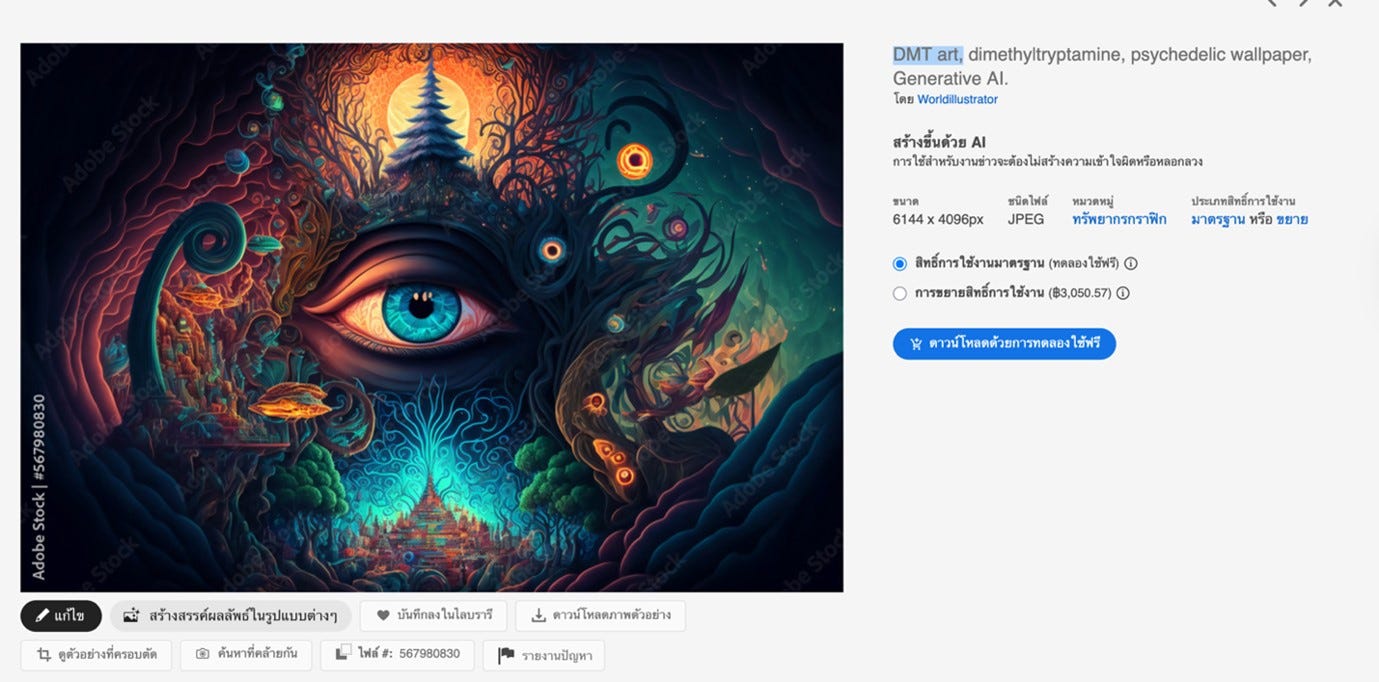
Duck-Duck-Go search results for DMT Art
As such, the platform’s perpetual stimuli seem to replicate the isolation-chamber effect of the smart device – it is the conduit through which the perpetual dream-state of anti-stimulation may occur and tone down the state of liminal ‘non-being’.
This is not to suggest that smartphone use is, in itself, a form of “brainwashing” or abduction – quite the opposite. As humans, we cannot do without sleep or dreaming, and the metaphor points to the genuinely pleasurable moments that devices can facilitate, moments in which we relax, drift, or briefly withdraw. The issue, rather, is one of perpetuity: too much sleep, too many dreams, which gradually dulls perception, producing a condition in which we are never fully awake, a true ‘permanent liminality’.
In this sense, the device – the smartphone – does not merely accompany this state but actively reproduces it, sustaining a hyper-dream condition that continually renews our inclination to return to it. What is notably absent is any decisive interruption, any moment that might break the immersion and re-anchor attention in what surrounds us.
Dirty Dreams
Let us conclude with a brief reflection on what is inevitably destined to become our mode of engagement – not merely with smart devices, but also with their new extensions, which are generally understood as artificial intelligence. This development effectively constitutes, at least in its marketized form, a new form of hyper-gnostic cognition with which we interact regularly, carried in our pockets or embedded within our everyday devices. These become fundamentally wearable and thus extended, mediating a form of human experience and imposing a kind of detachment from direct perception. Human experience mediated through AI has the potential to culminate in a dystopian scenario reminiscent of Huxley’s nightmare – not merely involving a state of passivity or dream-like submission, but false-awakening within a lucid dream. On one side, this may manifest as a form of virtual Baudrillardian hyperreality, indeed experimental thought experiments of the ‘Matrix’’ and whatnot. While this may be superficially acceptable, it leads to confusion and drowsiness in which we believe we are living in an authentic reality, yet our perceptions are actually mediated through interactions with AI. This constitutes a significant danger we face.
Furthermore, returning to our initial consideration about personal literature, even if this scenario is perceived as exceedingly dystopian and exaggerated, it is worthwhile to examine our interactions with tools like ChatGPT, observing the nature of the ongoing and in many ways endless conversations they facilitate. AI and the chronologies they imply serve as reminders that there exist personal timelines and hidden or private engagements: not simply something we wrote that now lingers in the ether for who knows how long, but what AI wrote in our name, or what we pretended to think or write ourselves, and these interactions can evoke a sense of ‘shame’ similar to that experienced with unspoken fantasies, which leave a lingering feeling of unease or shame – perhaps retrospectively felt by some of us whenever we engage with them after some time – with the model continuously improving, but our writing skills, perhaps, very much not.
Consequently, these subconscious desires and fears may become not solely a form of nightmares (“bad dreams dissolve at dawn”, cit. Dylan Dog – Italian comic book hero) but rather a form of virtualised ‘dirty dream’ – one that does not manifest physically or practically, but which are confined to our internal subliminal world, marking a form of lingering discomfort, a true subconscious incestuous agitation: an unease that permeates through (screen)time and (drowsed) space even when we wake, if ever.
Indeed, in an extreme scenario, with the hyperconnected progress of the AI of Things, embedded into our everyday appliances, talking and engaging with us perpetually, what if AI were to become the conduit for our very subconscious, which we may never detach from?